
Fabric Sustainability: Historical Practices with Modern Applications
Crafting for Community
✮
Crafting for Community ✮
The content of our clothing has changed a lot over time. The rise and continuation of synthetic fiber’s popularity changes the way that we view and interact with clothing in our world. Fast fashion encourages a shorter trend cycle encouraging profits and waste. Often these clothes are made of synthetic fibers or have rushed designs that do not hold up well, literally and figuratively. Straps break, a small tear when putting on a tight top, and raw edges on a fragile cloth are all common within this market. But it is just for one night, one wear, for one occasion before it is thrown out. The loss is barely a blip in time.
However, it is so much more heartbreaking when a loved and lasting piece of clothing has a noticeable issue. Many people mourn the loss, keep it in the back of their closet for a long time because ‘what if’, and ultimately get rid of the piece in the end. Not all hope is lost however, there are both simple and detailed ways to fix the issue whether a tear, hole, or stain.
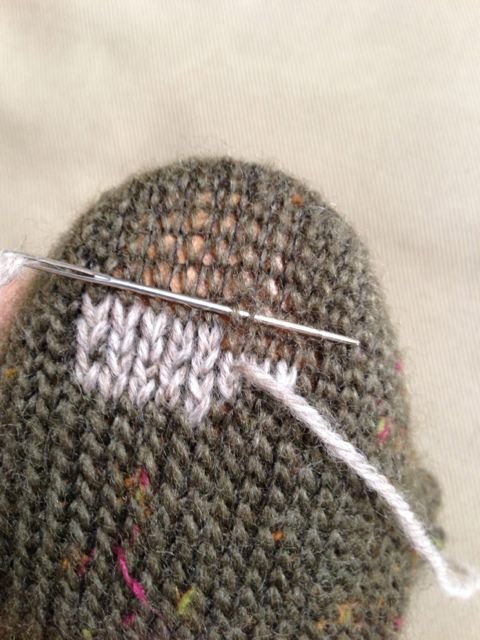
Knit Darning
This method follows the original stitch form to replicate the pattern of the garment. In this photo the original piece is in green while the new darning is grey.
Photo: @yuitumuni2011ky on Pinterest
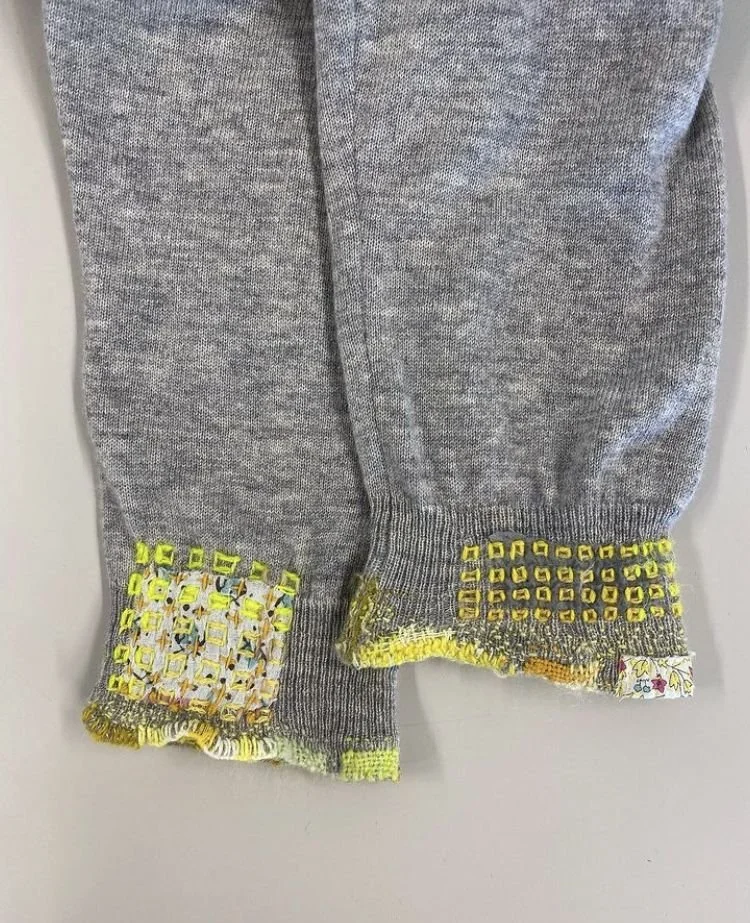
Darning
Darning is typically associated with socks, however it can be utilized with many different pieces of woven cloth, unless designated as a knit, the fabric most likely is woven fibers. You can also darn knit clothes though it requires a different process than woven fabrics because of connected stitches (see Knit Darning below). It was common among the population before the introduction of machine made pieces. It was expensive to buy fabric, and more so to buy clothing, most families could not afford new items each season. Thus clothing was fixed with patches and darning to lengthen the life of the garment further. In modern times, there are a lot more options allowing individuals to personalize and follow creativity. Discrete darns require color and texture matched fibers, which may be difficult to find. Similar alternatives include embroidery thread, which lacks softer texture but has many colors, or thin yarns, which lack color options but often are a softer texture. Although most houses no longer have darning mushrooms, an embroidery hoop or pins on a large cardboard piece can help hold the project still and taut which you are working.
Photo: @pattyjlyons on Pinterest
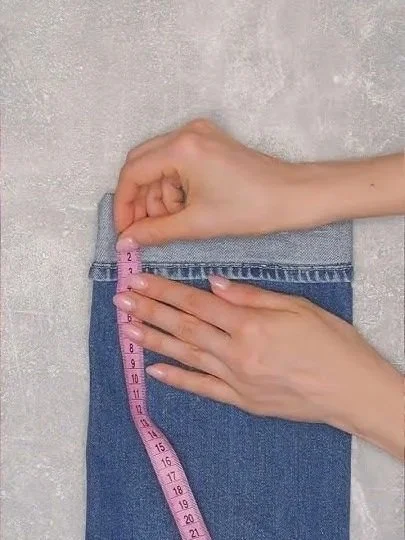
Hemming
Hemming is another simple alteration that can be achieved by hand by cutting and sewing a running stitch. Hemming techniques have been used for a longer time than can be measured, to shorten a piece and secure the edge. You should cut at least two hem widths below (also considered longer) than your intended final length of the project so that the hem can be folded and sewn cleanly. Keep in mind that bulkier fabrics will require a larger hem width because of the thickness of the fabric.
Photo: @ursula5918 on Pinterest
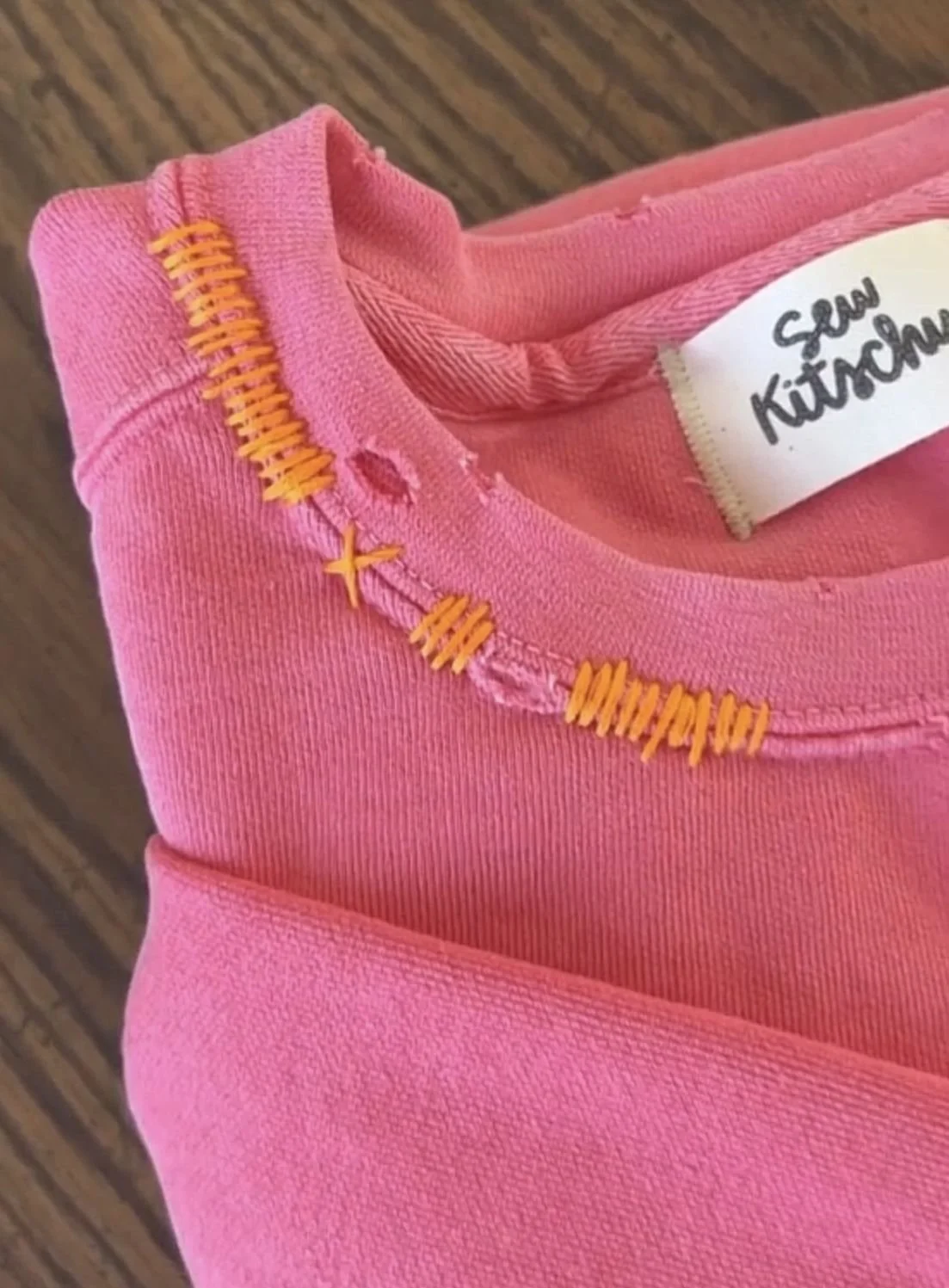
Decorative Embroidery and Stitching
Decorative Embroidery is another option for visible mending and alteration. This can be utilized to fix holes or tears and reinforce the piece. Typical embroidery can vary in thickness, stitch size, and structure of the thread. Embroidery thread comes as 6 strands that can be separated for use, for finer details use 3 or less strands in your work, larger details can use 4 or more strands. I would stray away from using all 6 strands at first though because the larger stitches can highlight your mistakes as you first attempt to stitch. A running stitch can still be utilized here, but you may be more interested in different decorative stitches like a french knot, chain stitch, or satin stitch to add some texture and dimension to your embroidery.
Photo: @WillowValleyFarmhouse on Pinterest
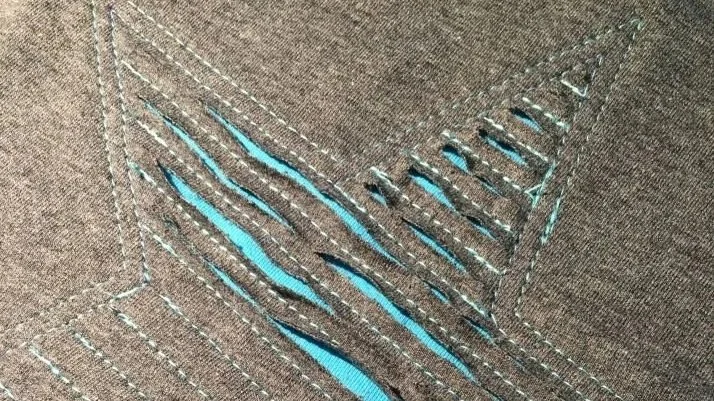
Photo: @Simolibo on Wordpress
Sashiko
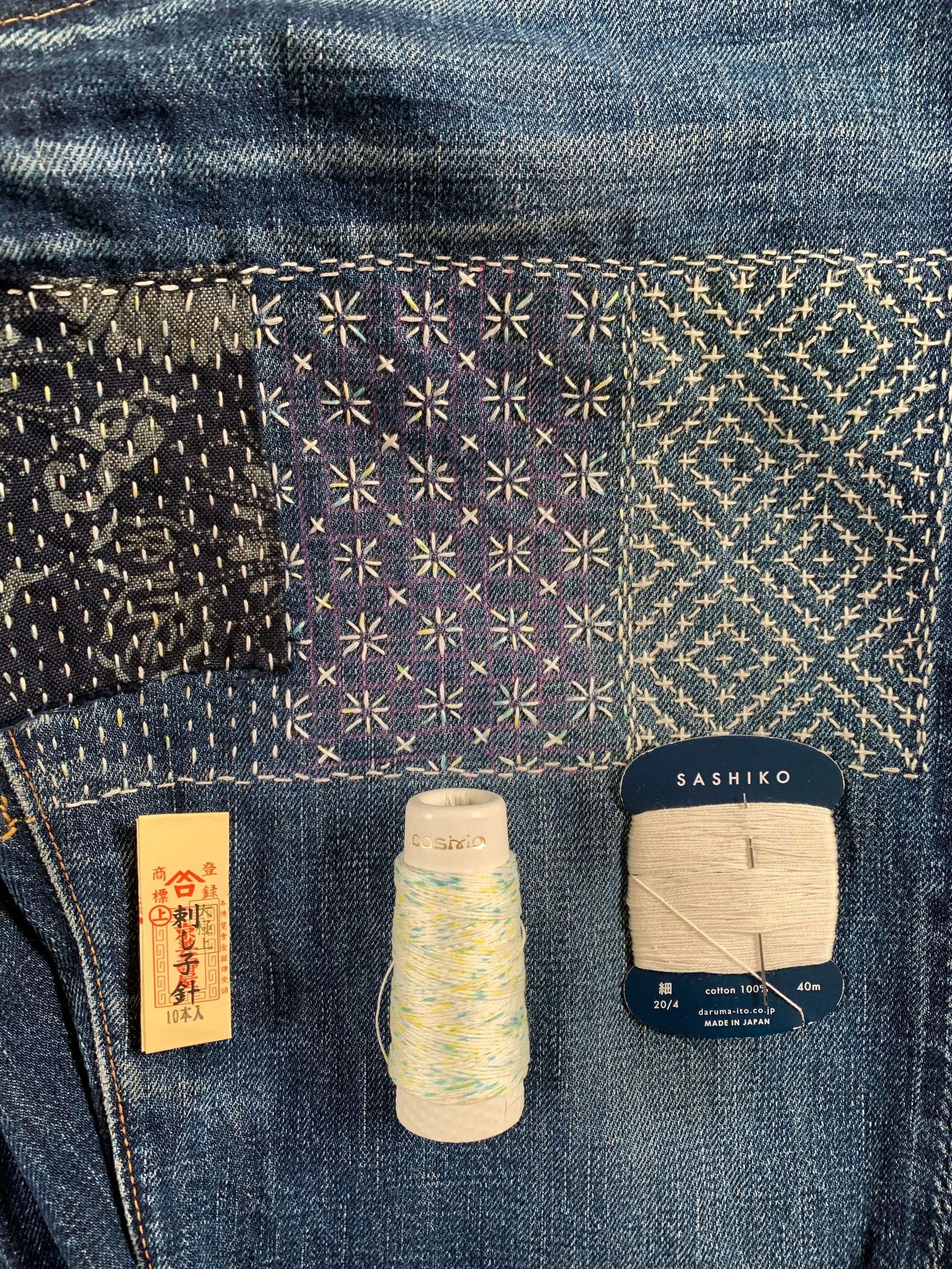
Sashiko is another form of decorative mending, originating in Japan, it is more geometric based and structured than American embroidery. It uses a base of running stitches to secure the fabric and geometric pattern in place. Usually placed as a thick white thread on a dark blue or denim background possibly with multiple layers of fabric. This art is very eye-catching and can help maintain warmth in the colder months. There are a few important differences between simple decorative embroidery and sashiko. Sashiko traditionally utilizes a thick white thread that does not separate into strands usually denoted as ‘special thread’ or ‘thickness 6’, but regular thread or embroidery strands should also work in a pinch.
Suggested Links and Tutorials:
Darning Links
Hemming Links
Decorative Stitching Links
Pinterest Search Term Ideas
Mending
Decorative Stitches
Invisible Hem
Blanket Stitch